[ Click for Text Only Version ] |
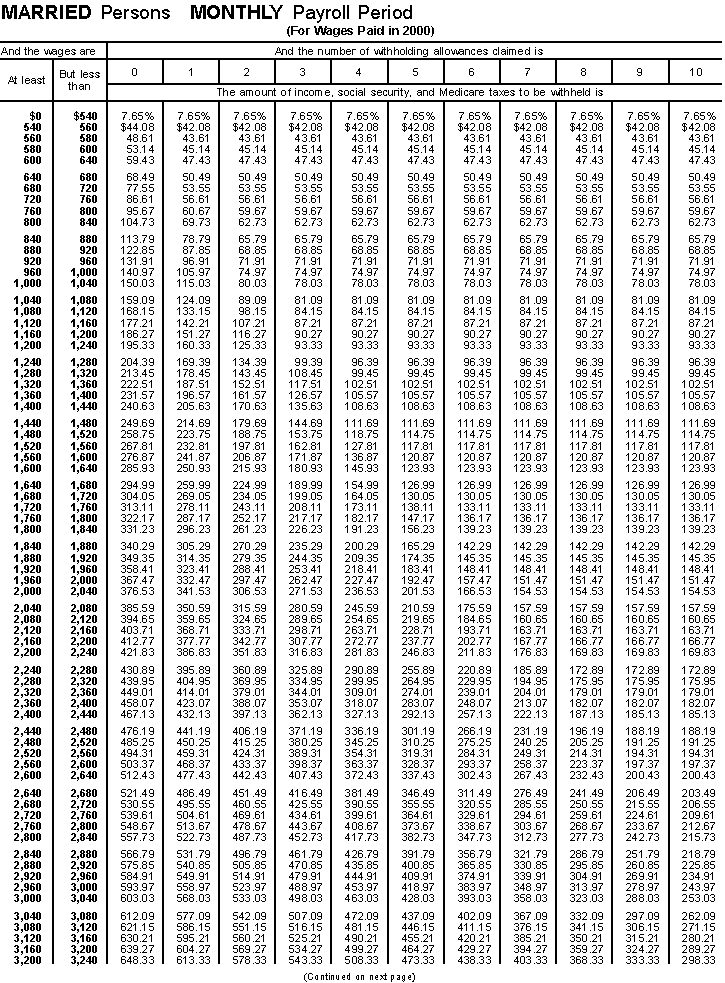
Combined Income Tax, Employee Social Security Tax, and Employee Medicare Tax Withholding TablesIf you want to combine amounts to be withheld as income tax, employee social security tax, and employee Medicare tax, you may use the combined tables on pages 38-57. Combined withholding tables for single and married taxpayers are shown for weekly, biweekly, semimonthly, monthly, and daily or miscellaneous payroll periods. The payroll period and marital status of the employee determine the table to be used. If the wages are greater than the highest wage bracket in the applicable table, you will have to use one of the other methods for figuring income tax withholding described in this publication or in Circular E. For wages that do not exceed $76,200, the combined social security tax rate and Medicare tax rate is 7.65% each for both the employee and the employer for wages paid in 2000. You can figure the employee social security tax by multiplying the wages by 6.2%, and you can figure the employee Medicare tax by multiplying the wages by 1.45%. The combined tables give the correct total withholding only if wages for social security and Medicare taxes and income tax withholding are the same. When you have paid more than the maximum amount of wages subject to social security tax ($76,200 in 2000) in a calendar year, you may no longer use the combined tables. If you use the combined withholding tables, use the following steps to find the amounts to report on your Form 941, Employer's Quarterly Federal Tax Return.
|
|
|